 Basics
A short history of cacao
In short
Cacao has been part of life in the Americas for more than five thousand years. It was a drink, a gift, an offering and, for a time, a kind of money. Below, what archaeologists and historians know about ancient use is kept apart from the modern gatherings people now call cacao ceremonies.
 By Katya
Updated
4 min read

Where cacao began
The cacao tree, Theobroma cacao, is native to the upper Amazon. The oldest evidence of people using it comes from Santa Ana-La Florida in southern Ecuador, where archaeologists found cacao residue in pottery about 5,300 years old, left by the Mayo-Chinchipe culture. From South America, cacao travelled north, and by around 3,000 years ago people in Mesoamerica (today’s Mexico and Central America) were preparing cacao drinks in ceramic vessels.
Cacao among the Maya
For the Classic Maya (roughly 250–900 CE), cacao was woven into daily and ceremonial life. In a 5th-century tomb at Río Azul, in what is now northern Guatemala, archaeologists found a lidded vessel painted with the glyph for kakaw. Chemical tests of the residue inside confirmed it had held a cacao drink.
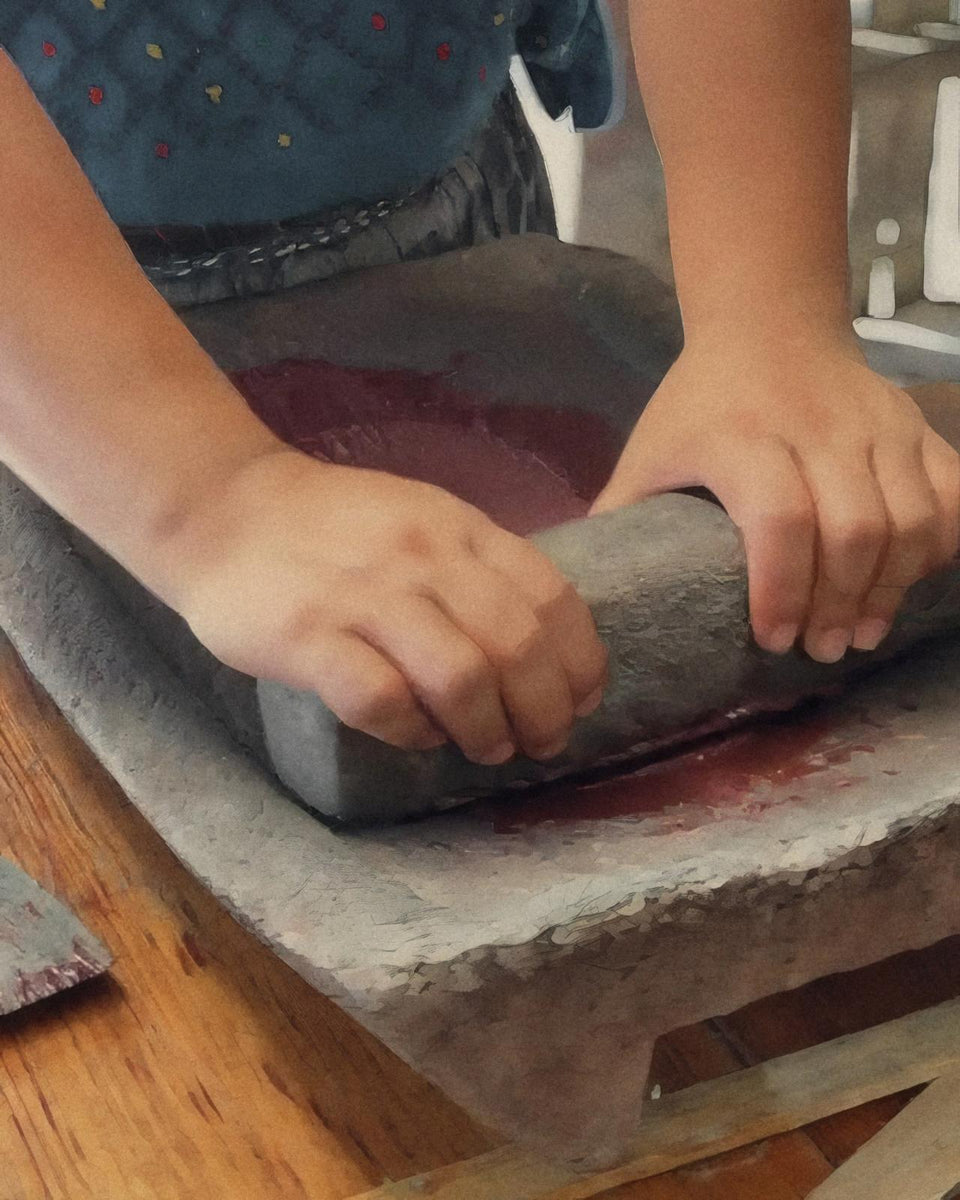
Cacao appears in Maya painted ceramics, in scenes of feasts and royal courts, and in accounts of marriage, offerings and hospitality. It was frothed by pouring the drink from one vessel to another from a height, and often flavoured with chili, flowers or maize.
Cacao as currency
By the time Spanish chroniclers arrived in the 16th century, cacao beans were used as a medium of exchange across much of Mesoamerica. Aztec tribute records list loads of cacao paid by growing provinces such as Soconusco, on the Pacific coast near today’s border between Mexico and Guatemala.
Guatemala today
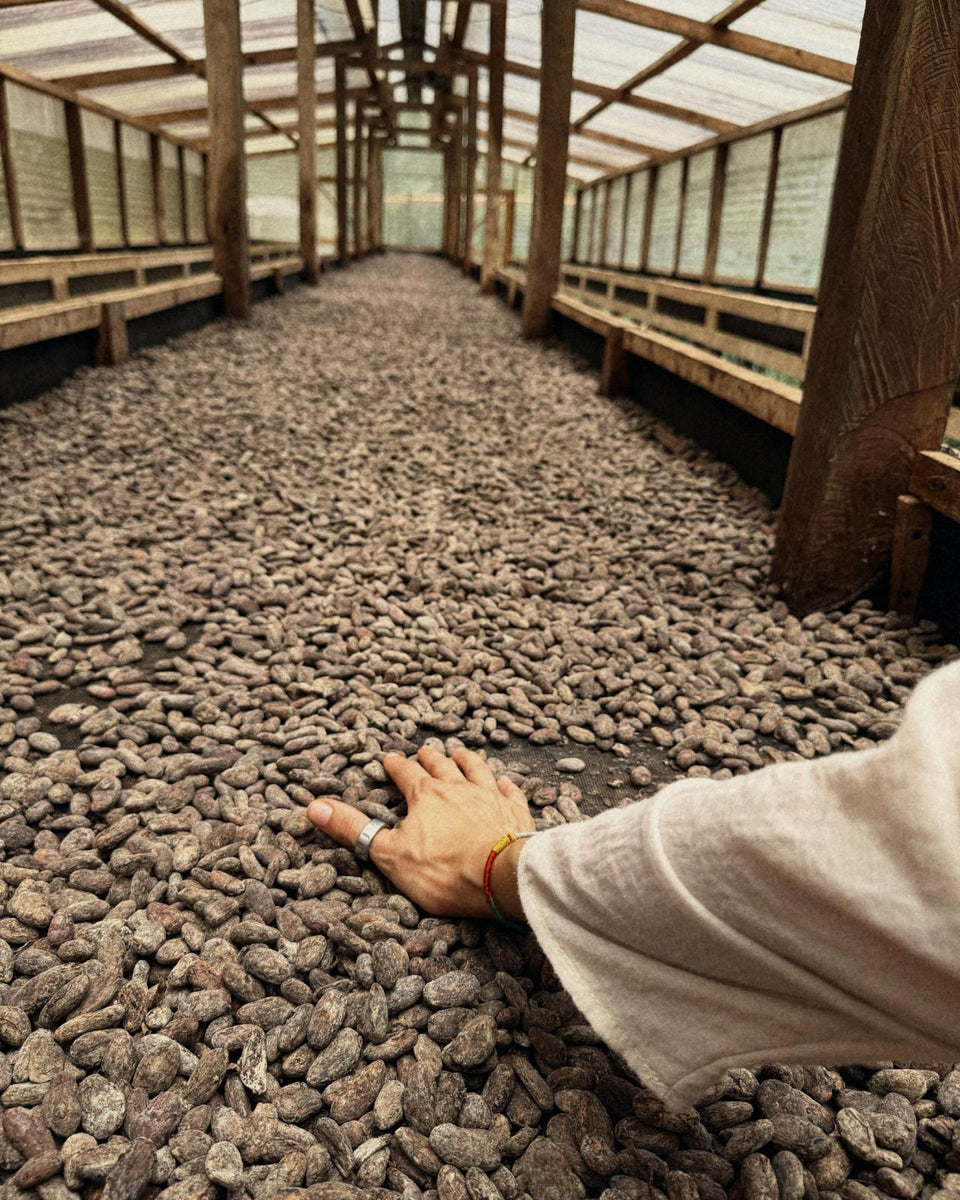
Guatemala is part of the historic heartland of Mesoamerican cacao traditions. Cacao is still grown here, mostly by smallholder families, in departments such as Alta Verapaz, Suchitepéquez, San Marcos and Petén. Many Maya communities continue to prepare cacao at home and for family and community occasions, in ways that are their own and not ours to describe for them.

The modern cacao ceremony
What many people today call a “cacao ceremony” is a modern practice. It grew from the late 1990s and 2000s, much of it around San Marcos La Laguna on Lake Atitlán, where travellers gathered to drink cacao together, often with music, meditation or quiet conversation. It has since spread around the world.
These gatherings draw inspiration from cacao’s long history, but they are not a continuation of a specific ancient Maya rite, and we don’t present them that way. A modern gathering is just that: people sharing a warm cup and some time together.
How we try to work
I make cacao for a simple reason: since it came into my life and I started drinking it every day, my life has become happier. At the same time, cacao carries thousands of years of history that isn’t mine, and I try to hold both with care.
- We don’t use Maya glyphs, sacred designs or textiles as decoration.
- We deeply respect Maya traditions, around cacao and beyond. We don’t copy them or present ourselves as part of them; we’re grateful to learn from knowledge that has been kept for thousands of years.
- We don’t work directly with Maya farming families yet. One day I hope to source our cacao from them and to work with them, and that’s where we’re heading.
Sources
- Zarrillo et al., “The use and domestication of Theobroma cacao during the mid-Holocene in the upper Amazon”, Nature Ecology & Evolution, 2018. Summary: Smithsonian Magazine
- Hall et al., “Cacao residues in ancient Maya vessels from Río Azul, Guatemala”, American Antiquity 55(1), 1990. tDAR record; Atlas Obscura
- Powis et al., early cacao use in Mesoamerica. PDF
- Grivetti & Shapiro (eds.), Chocolate: History, Culture, and Heritage, Wiley, 2009. Excerpt
- On the modern ceremony: Dismantle Magazine, 2020; University of Oregon thesis
- Guatemalan growing regions: Prensa Libre (MAGA data)
Keep learning
Basics Ceremony & culture
What is a cacao ceremony?
A cacao ceremony is a modern gathering in which people drink a cup of cacao together, slowly and with some intention. It draws on cacao’s long history in Mesoamerica, but as a practice it… Preparation